
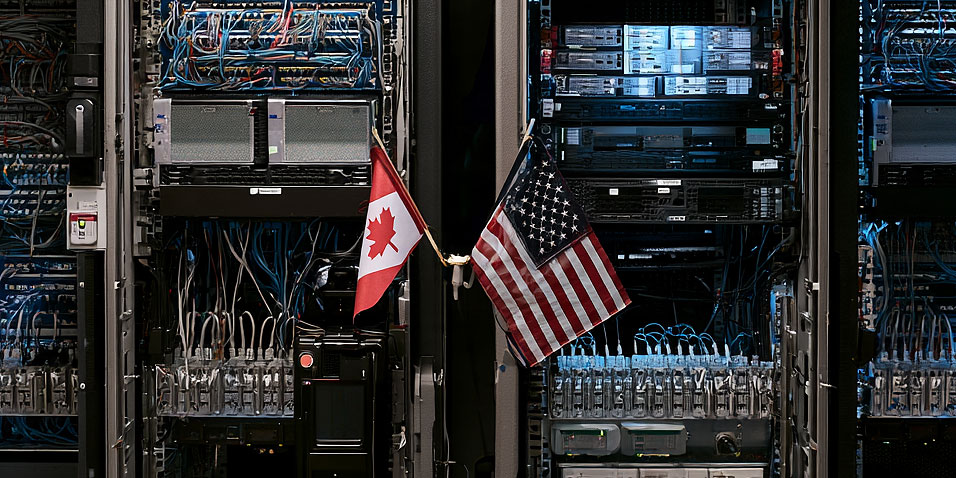
For a Canadian SMB looking to work in the defense sector, the acronyms can quickly pile up: CPCSC, CMMC, NIST, ITSP… At first glance, it may seem that Canada and the United States have created two completely different systems, forcing suppliers operating on both sides of the border to start their compliance work from scratch. Fortunately, the reality is more nuanced.
The Canadian Program for Cyber Security Certification, or CPCSC, was specifically designed to maintain strong compatibility with the Cybersecurity Maturity Model Certification, better known as CMMC, used by the U.S. Department of Defense.
For Canadian suppliers, understanding this alignment makes it possible to make better decisions today and avoid building two independent cybersecurity programs.
Two National Programs, One Shared Objective
The CPCSC is Canada’s official cybersecurity certification program aimed in particular at defense-sector suppliers. According to the Government of Canada, its objective is to protect sensitive contractual information and strengthen the resilience of the defense supply chain.
In the United States, CMMC follows a similar approach. It is intended to verify that companies handling certain defense contract information actually have the required safeguards in place.
However, each country retains its own governance, assessment mechanisms, and contractual obligations. A company should therefore not assume that a certification obtained in one country automatically constitutes certification in the other.
Canada does, however, state that the CPCSC was designed to reduce duplication and that a valid CMMC certification may, in certain situations, be recognized on a case-by-case basis when its scope aligns with Canadian requirements.
Significant Technical Alignment
The similarities become particularly important at the control level. The Government of Canada indicates that the CPCSC is based on the same technical foundations as the U.S. requirements associated with CMMC. Canada’s ITSP.10.171 standard from the Canadian Centre for Cyber Security includes controls derived from the NIST framework used in the United States.
In practical terms, the areas covered are very similar: access management, authentication, logging, system protection, configuration, incident response, training, monitoring, and information protection.
For a Canadian SMB already working to meet CPCSC requirements, investments made in these areas are therefore not wasted if it eventually wants to enter the U.S. market.
That does not mean the two approaches are interchangeable. Contracts, the information involved, the assessed scope, and the required certification level must always be reviewed separately.
Scope Is Just as Important as Controls
One of the most costly mistakes is to think only in terms of technology. A firewall, multifactor authentication, or a detection tool is not enough on its own to define a compliant environment.
You also need to know which users will have access to the relevant information, which systems will store it, which applications will process it, and how it will move among the various parties involved. This is why defining the scope is a strategic step.
A company that mixes its routine commercial operations and defense activities within the same environment may significantly expand the portion of its infrastructure that must be assessed, documented, and controlled. Conversely, a dedicated environment makes it easier to isolate the relevant data, users, and processes.
This is precisely the principle behind TurboDef: providing a secure environment dedicated to defense-related activities rather than requiring an SMB to transform its entire IT environment.
Preparing for Canada Without Losing Sight of the United States
For companies considering both markets, the right approach is to build a consistent cybersecurity foundation. Access controls, logging, document management, monitoring, and compliance evidence can be designed from the outset to support both processes.
This approach also reflects what TechNuCom explains in its article on the role a well-governed ERP can play in cybersecurity: protection depends not only on traditional security tools, but also on how data, access, and processes are structured.
For an SMB, this consistency can make all the difference between compliance experienced as a series of costly projects and a structured approach that progressively supports growth in the defense sector.
Would you like to assess how your current environment could meet Canadian requirements while preparing for your U.S. ambitions?